
Mark Goering
08/11/2025
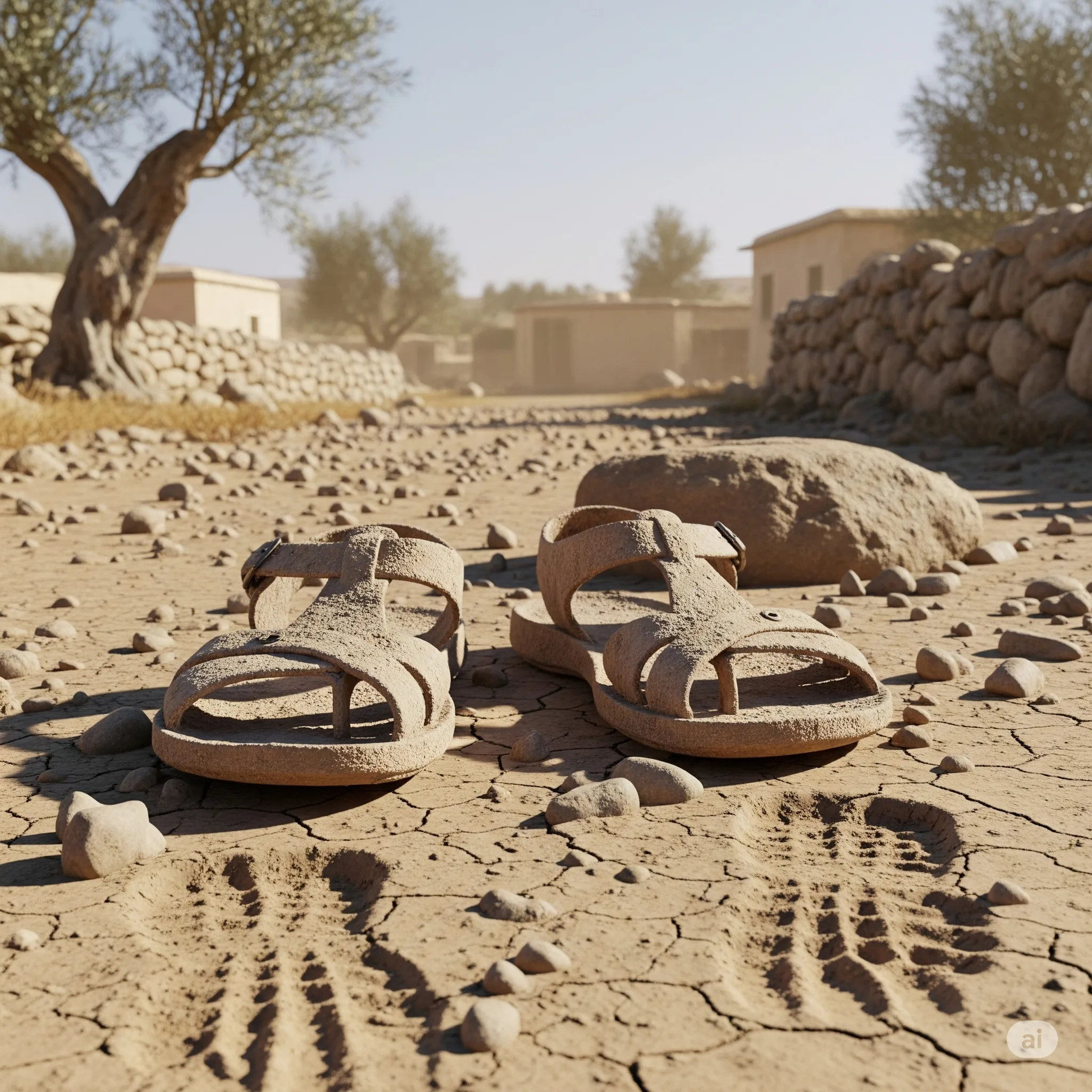
In the bustling streets of first-century Palestine, Jesus didn’t launch His ministry from the comfortable confines of religious institutions. Instead, He chose the dusty roads, fishing boats, and humble homes of ordinary people. This “muddy boots” approach—where impact emerges starting from the messy reality of everyday life—wasn’t just His preferred method; it was a deliberate strategy for Kingdom advancement that would eventually transform the world.
The Gospel of Mark paints a vivid picture of Jesus as the ultimate muddy boots practitioner. We see Him touching lepers, dining with tax collectors, teaching from fishing boats, and walking miles between villages. He didn’t just proclaim the Kingdom of God; He demonstrated it through intimate, personal engagement with individuals and communities. His ministry was marked by a willingness to step into the mud of lostness—the complications, the struggles, and the everyday challenges of real people.
What makes Jesus’ approach particularly striking is how He balanced front lines, personal ministry with a global vision for Kingdom expansion. While He might spend hours with a single Samaritan woman at a well or invest deeply in a small group of obedient disciples, His eyes were always fixed on a much broader horizon. “Go into all the world,” He would later command, revealing that these small, seemingly insignificant encounters were part of a greater strategy for worldwide impact.
This tension between the micro and macro levels of ministry is central to understanding Jesus’ muddy boots methodology. When He healed Peter’s mother in law, He wasn’t just performing an isolated miracle—He was demonstrating the Kingdom’s power and training His disciples in how the Kingdom grows and multiplies to new peoples and places. When He taught in parables by the lakeshore, He wasn’t merely sharing wisdom—He was laying out principles that would guide Kingdom advancement for generations to come.
Perhaps most significantly, Jesus’ muddy boots approach was inherently replicable. He wasn’t developing complex systems or elaborate programs; He was modeling a simple, reproducible pattern of Kingdom work that could be implemented anywhere, by anyone willing to get their boots dirty. His disciples watched as He engaged new towns, healed the sick, proclaimed truth, and identified disciples that would repent and obey His commands. They observed His methods, internalized His principles, and later replicated this same pattern throughout the known world.
The genius of Jesus’ strategy lies in its scalability through simplicity. By focusing on small, intentional actions while maintaining a global vision, He created a blueprint for Kingdom advancement that could grow exponentially without losing its essential character. Whether in a fishing village in Galilee or a major city like Jerusalem, the same principles applied: get close to people, invest deeply, demonstrate the Kingdom’s power, and equip others to do the same.
Today, as we consider how to advance God’s Kingdom in our own contexts, Jesus’ muddy boots approach remains our definitive model. It reminds us that significant movements often begin with small, seemingly insignificant acts of obedience. It teaches us that Kingdom work requires both the willingness to engage in the mess of real life and the vision to see beyond immediate circumstances to greater possibilities.
This is what Muddy Boots Church Planting is all about—following Jesus’ example of combining intimate, ground-level engagement with a vision for global impact. It’s about being willing to step into the mud, to invest deeply in people and communities, while never losing sight of the broader Kingdom perspective that drives us forward.
Tension Between the Macro and Micro: Jesus’ Big Vision, Small Actions
At first glance, there seems to be a paradox in Jesus’ ministry. Here was the Son of God, here to establish a Kingdom that would encompass the entire earth, yet He spent most of His time in obscure villages, engaging with ordinary individuals, and investing deeply in just twelve disciples. This apparent contradiction, however, reveals a profound truth about Kingdom advancement: the pathway to macro-level impact often runs through micro-level engagement.
Throughout the Gospels, we see Jesus operating simultaneously on two scales. His words often pointed to the grand scope of His mission—”This gospel of the kingdom will be proclaimed throughout the whole world” (Matthew 24:14)—while His daily actions focused on the immediate and personal. He would speak of gathering people from every nation, then stop to heal one blind beggar. He would proclaim a Kingdom that would outlast empires, then spend an evening in someone’s home, sharing a meal and intimate conversation.
This tension wasn’t a contradiction in Jesus’ ministry; it was the very engine of it. Every small action was intentionally designed to serve His larger vision. When He called Matthew from his tax booth, He wasn’t just changing one man’s life—He was establishing a pattern for how the Kingdom would advance through identifying movement leaders and equipping them with a Kingdom pattern. When He sent His disciples to practice ministry in nearby villages, He wasn’t merely giving them experience—He was laying the groundwork for a movement that would eventually reach the ends of the earth.
The genius of Jesus’ approach lies in how He embraced this tension rather than trying to resolve it. He understood that Kingdom work requires both the patience for small beginnings and the faith for explosive growth. Like the mustard seed He often referenced, His ministry demonstrated that the smallest actions, when aligned with God’s purposes, contain within them the potential for extraordinary expansion.
This same tension characterizes authentic Muddy Boots Church Planting today. It requires us to think globally while acting locally, to dream big while staying faithful in small things, to maintain a vision for citywide transformation while being willing to spend hours with a single seeking soul. It’s about understanding that every coffee shop conversation, every prayer with a neighbor, every act of local service is part of a larger story of Kingdom advancement.
The challenge for modern church planters is to hold both ends of this tension—the macro and the micro—without letting either one overwhelm the other. We must resist the temptation to become so focused on our grand visions that we neglect the crucial ground-level work of discipleship. Equally, we must avoid becoming so absorbed in local ministry that we lose sight of the broader Kingdom movements God wants to catalyze through our faithful, small-scale efforts.
In Jesus’ ministry, we see a perfect integration of these two dimensions. His micro-level engagement wasn’t just busy work—it was strategically focused on maximum Kingdom impact. And His macro-level vision wasn’t just inspiring rhetoric—it was practically worked out through intentional, personal investment in individuals and communities.
Jesus’ Ministry as a Model for Muddy Boots Church Planting: Mark 1-4
The first four chapters of Mark’s Gospel provide us with more than just a historical account of Jesus’ early ministry—they offer a practical, replicable framework for Kingdom advancement through Muddy Boots Church Planting. Here, we see Jesus establishing patterns that would become the foundation for all future church planting movements.
Mark’s narrative begins with Jesus’ emergence from the wilderness, immediately plunging into the thick of ministry with three distinct but interconnected elements: proclamation of the Kingdom, demonstration of its power, and intentional “with-ness” with His disciples. These form the core of the Muddy Boots methodology, yet they also hint at a more complete pattern Jesus would later reveal.
First, consider Jesus’ proclamation. His message was clear and compelling: “The time is fulfilled, and the kingdom of God is at hand; repent and believe in the gospel” (Mark 1:15). But this wasn’t a distant broadcast; it was embedded in entry into strategic locations and relational networks, shared while walking along shorelines, sitting in homes, and engaging in everyday life. The gospel wasn’t just announced—it was sown into the soil of people’s lives, preparing them for something deeper.
Second, Jesus demonstrated the Kingdom’s power through tangible actions. In these early chapters, we see Him healing the sick, casting out demons, and calming storms. These were not mere displays of supernatural ability—they were signs of the Kingdom’s presence breaking into homes and communities. When He healed Simon’s mother-in-law (Mark 1:29-31), He was planting the Kingdom’s influence in that household, modeling how the Kingdom would take root and multiply.
Most significantly, Jesus engaged in what we might call “intentional withness”—the deliberate sharing of life with His disciples. Mark 3:13-14 shows Jesus calling the twelve to be with Him, not just to learn from His teachings, but to live alongside Him, observing how He navigated ministry in real time. This wasn’t simply training; it was an invitation into a replicable way of life, one that they would carry forward into new places and relationships.
These three elements—proclamation, demonstration, and with-ness—reflect Jesus’ method on the surface, but they also point to a deeper framework of Kingdom growth that emerges later. As Jesus moves from town to town, investing in relationships and communities, we begin to see a pattern forming: an intentional process of entry, proclamation, investment, and multiplication. In Mark 4:26-29, Jesus will unveil this process in His teaching about the Kingdom as a growing seed—an organic, reproducible cycle of growth and harvest that starts small but expands into something far greater.
As we explore this pattern further, we will see how Jesus wasn’t just doing ministry in isolated moments. He was laying the groundwork for a Kingdom movement—a process that begins with small, intentional actions and leads to multiplication that can transform communities and beyond.
The progression in these chapters is telling. Jesus begins with individual encounters, moves to small group discipleship, and gradually expands to impact entire communities. By Mark 4, He’s teaching large crowds, but notice that He explains everything privately to His disciples (Mark 4:34). This pattern—broad gospel seed sowing coupled with private investment in the obedient few—becomes a blueprint for sustainable Kingdom expansion.
The parables in Mark 4 further illuminate this strategy. The Parable of the Sower teaches us about the importance of receptive hearts in different contexts. The Parable of the Growing Seed reminds us that while we participate in the work, God causes the growth. The Parable of the Mustard Seed shows how small beginnings lead to significant impact. These aren’t just teaching stories; they’re strategic principles for Muddy Boots practitioners.
What emerges from these chapters is a clear model: start small, invest deeply, demonstrate the Kingdom’s reality through word and deed, and prioritize the development of others who can replicate this pattern. It’s a model that combines the immediate and practical with the visionary and strategic—teaching us that effective church planting movements grow from the ground up, one life at a time.
This approach might seem slow by modern standards, but its effectiveness is undeniable. Within a few years, these same disciples who watched Jesus model ministry in the villages of Galilee would be leading a movement that would spread throughout the Roman Empire and beyond.
They succeeded because they followed His pattern—getting their own boots muddy in the daily work of Kingdom advancement while keeping their eyes fixed on the broader vision of global impact.
Article edited with AI assistance